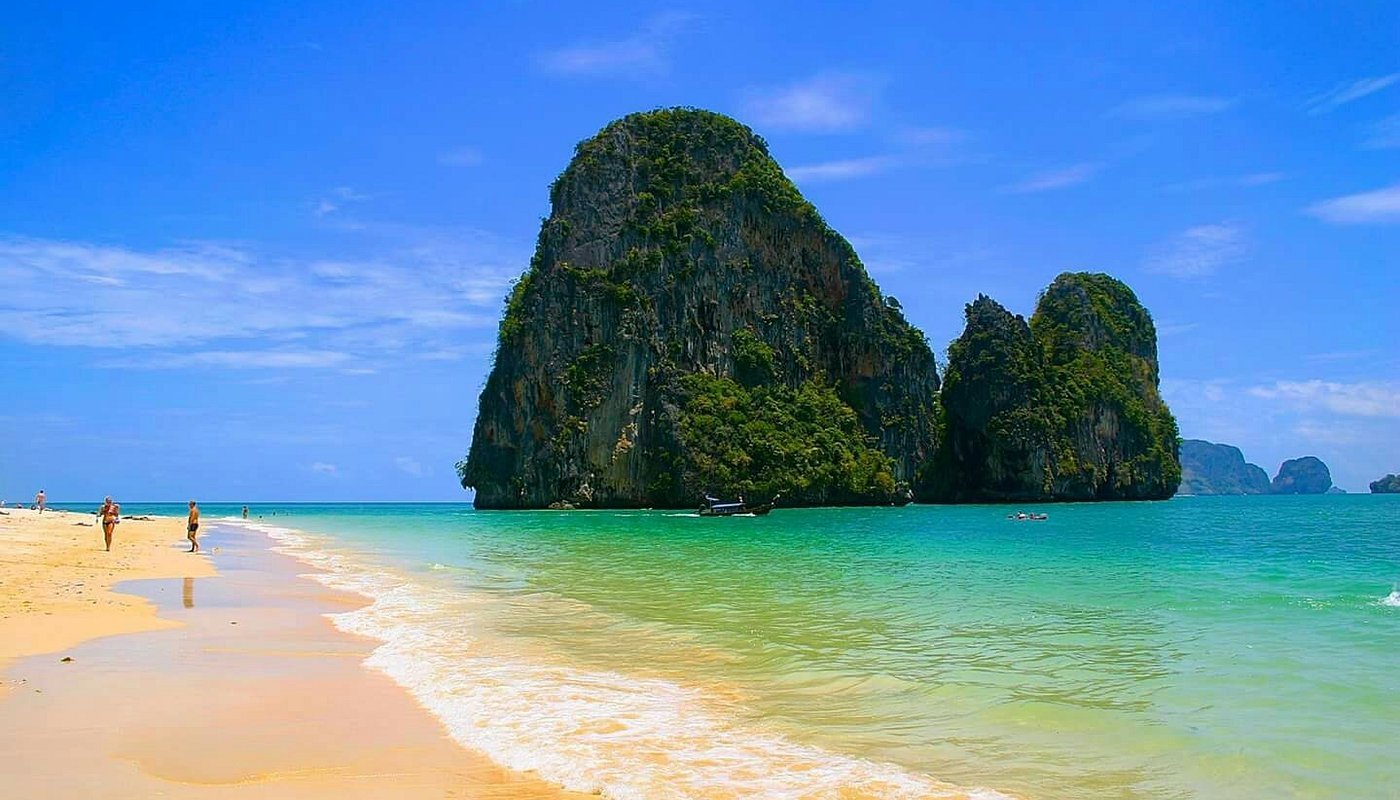
More than a photograph of the cliffs
Phra Nang Cave Beach combines the limestone setting that draws people to Krabi with a place of local religious significance. The Tourism Authority of Thailand identifies the beach and cave together; its Travel with Care guide describes the shrine as a place of faith for fishermen and sailors. Visit with time to enjoy the shore and respect that meaning. The cave is not simply a prop at the end of a swimming beach.
The important planning choice is whether you are coming from the mainland for the day or staying on the Railay peninsula. A day visitor needs to give the outward journey, walk and return connection enough room. An overnight visitor can be more flexible about when to leave the hotel. Neither arrangement guarantees an empty beach, safe swimming water or a particular sunset, so choose a plan that works without those promises.
Reach Railay, then use the public route
Rayavadee’s official transportation information confirms public longtail connections to Railay from Ao Nang Beach and Ao Nam Mao Pier. The operator warns that services depend on availability and weather. Decide your actual arrival point with the boat operator rather than assuming every departure lands at the same beach. Carry luggage or day bags in a way that leaves your hands available for boarding, and ask how landing will work if anyone in your group needs assistance.
Once on Railay, follow the public walking route towards Phra Nang from the Railay East side. Railei Beach Club’s local guide identifies the path to Phra Nang and notes that the viewpoint and lagoon track branches from it. Do not plan a shortcut through a resort’s private grounds merely because a map appears to show a shorter line. Ask for the public route at your accommodation or arrival point, then allow time to find it without rushing.
A shore-level visit and a viewpoint or lagoon climb are different outings. The Beach Club describes the viewpoint and lagoon track separately from the beach path. Keep the beach as your goal if that is what you prepared for; there is no obligation to follow another traveller onto a climb. If you intend to add a climbing activity, obtain current local guidance, suitable equipment and an appropriate operator rather than treating it as an automatic detour in beach sandals.
Give the shrine its own space
At the cave shrine, pause before taking photographs. Respect offerings and leave them where they are. Keep space for people who are there to worship and avoid turning sacred objects into a joke or touching them for a staged picture. You can appreciate the limestone and the beach without needing to photograph every part of the shrine. Ask permission before including identifiable worshippers in a close photograph.
If visiting with children, explain that this is a place where people bring beliefs and hopes connected with the sea. There is no need to invent one definitive origin story. A useful visit can be brief: look carefully, behave quietly and move aside for others. Take food packaging and other rubbish back with you, and do not leave a new object behind on the assumption that it belongs with the existing offerings.
Build a beach day that can change
Bring water, sun protection and what you need for a walk before you leave your base. Check where you can take a break or buy lunch on Railay rather than making the entire day depend on an unverified beach vendor. Judge whether to swim from the conditions and local advice on arrival. The cliffs make an impressive backdrop, but attractive scenery does not establish safe water. Keep clear of boat movements and do not swim out to offshore rocks simply because they look close in a photograph.
You can divide the day into a walk to the beach, time by the shore and a return to Railay for a meal. Leave the order open if the weather changes. If sunset is the main goal, make the return arrangement before you settle down on the sand. Rayavadee specifically cautions non-resident diners to arrange their own boat transport, subject to weather and availability. A restaurant reservation and a boat home are separate arrangements, even when both appear in the same evening plan.
Where to stay and what to verify
Rayavadee’s Grotto restaurant is officially described as standing at the edge of Phra Nang Beach. That gives the resort a particularly direct relationship with this beach, but a public beach visit is not a booking for its restaurant or permission to use hotel facilities. The restaurant publishes its own reservation process and dress requirements. If it matters to your trip, check those conditions directly and do not assume a table is available because you can reach the shore.
Other reviewed Railay hotels can make Phra Nang part of an overnight stay, with a walk from the hotel’s actual position. Compare that with an Ao Nang base if mainland road access is more important. No current universal beach entry fee or definitive closure notice was established for this guide. Confirm local restrictions and any applicable park charges before departing; an accessible tourism page is not proof that every route or activity is operating on your travel day. Keep a return margin so the place can be enjoyed without a last-minute rush to the boat.
A few useful answers
Do I need to climb to reach the cave beach?
The shore visit uses the public route towards Phra Nang from Railay East. The viewpoint and lagoon track is a separate branch identified by Railei Beach Club; it should not be treated as a required part of the beach visit.
Does a Grotto restaurant booking include my boat transfer?
Rayavadee says non-resident guests arrange their own transport. Confirm the outward and return journey separately with a boat operator.